Kids today can unlock your phone faster than you can. They can find any song, any video, any answer in about four seconds.
But if they have to fix a flat tire on the side of the road? That’s a different conversation.
That’s not a knock on them. It’s a reminder for us. The internet can teach our kids almost anything, but there’s a list of life skills that hit different when they come from Dad. Standing next to you. Watching you mess it up the first time. Laughing about it. Getting it right together.
My own dad wasn’t around to teach me how to do the things that are dad’s responsibility. Still that’s even more reason why I have to make sure my kids know the things I can teach them when I leave this earth. My dad taught me one good skill. Never tell anyone how much money you actually have. Wiser words have never been spoken. So what about the numerous other things they need to know?
These are the skills I think every kid should walk out of the house with. I graded each one by how much it matters when life actually shows up. Some are practical. Some are about character. All of them are on us.
1. How to Apologize Like You Mean It
Grade: A+
We’re starting here because it’s the one most of us were never taught.
A real apology has three parts. Say what you did, why it was wrong and what you’ll do differently. No “I’m sorry you feel that way.” No “but.” Just ownership.
The best way to teach it is to do it. When you snap at your kid after a long day, go back and apologize to them. Out loud. Specifically. That one moment teaches more than a hundred lectures ever could. This is a practice I teach my son and when you apologize to them it opens up their world. My son isn’t generous with his apologies and I appreciate that because when he says I’m sorry. I know he means it.
2. How to Handle Money
Grade: A+
Money is the skill school mostly skips, so it falls on us. That’s why I’m so glad this was the only thing my dad taught me.
Start small. Let them see you compare prices at the store. Explain why you’re not buying the thing right now. Give them a little cash and let them make a bad purchase while the stakes are low. Ten dollars wasted on junk at nine years old is cheaper than ten thousand wasted at twenty-five.
As they get older, talk about saving, credit, and why “buy now, pay later” is rarely a deal. The goal isn’t to make them stressed about money. It’s to make sure money never feels like a mystery.
3. How to Cook Three Real Meals
Grade: A
Not microwave meals. Real ones. Something with a protein, something green, and something that fills you up.
Pick three. Maybe it’s eggs any style, a solid pasta dish, and your famous Sunday chicken. Cook them together until they can do it without you.
A kid who can feed themselves is a kid who won’t be living on ramen and regret their first year out of the house. And honestly? Some of the best conversations happen over a cutting board.
I think every one needs to know how to make a good pasta dish, something they bake and know how to cook steak to any temperature.
4. How to Change a Tire
Grade: A
Every kid who’s going to drive needs to know this before they get the keys. Boy. Girl. Period.
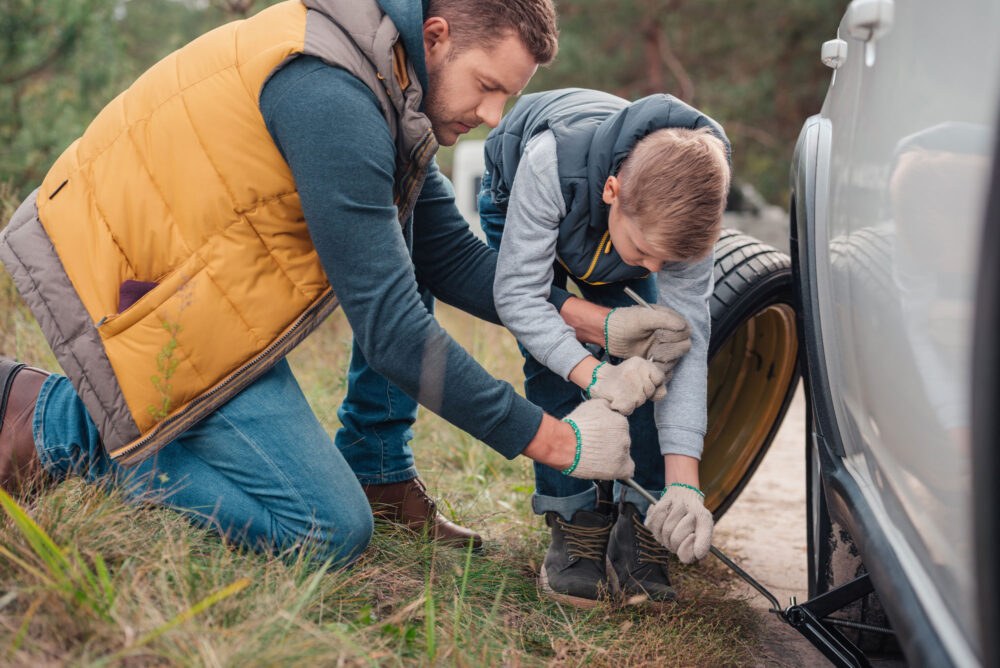
Change a tire together in the driveway on a nice day, not on the shoulder of the highway at night. Show them where the spare is, how the jack works, the star pattern for the lug nuts, and why you loosen them before you lift the car.
While you’re out there, teach them how to jump start a battery and check their tire pressure too. It’s the kind of knowledge that turns a panic moment into a minor inconvenience.
5. How to Introduce Themselves
Grade: A
Eye contact. A firm handshake or a confident hello. Say your name clearly. Ask the other person a question.
It sounds simple, but a lot of adults never got comfortable with it. Practice at the barbershop, at the restaurant, with your friends. Let your kid order their own food. Let them talk to the coach. Every rep builds confidence they’ll carry into interviews, first days, and rooms where nobody knows them yet.
6. How to Lose With Class
Grade: A
Board games, pickup basketball, video games. Wherever you compete with your kids, don’t always let them win.
They need to know what it feels like to lose, and they need to see what it looks like to handle it well. Shake hands. Say good game. Figure out what you’d do differently next time. Then run it back.
Life is going to hand them plenty of losses. Teach them that losing is information, not identity.
7. How to Swim
Grade: A
This one is a safety skill first. Everything else comes second.
If you’re not a strong swimmer yourself, no shame. Sign up for lessons together. Your kid seeing you learn something new as a grown man is a lesson in itself. My son is in swimming lessons every weekend and I love that he is learning how to swim.
8. How to Use Basic Tools
Grade: B+
A hammer, a screwdriver, a tape measure, a level, and a drill. That’s the starter kit.
Let them help you hang a picture, tighten a loose cabinet, or put together the furniture that came with instructions nobody can read. They don’t need to become a contractor. They just need to know they can fix small things instead of panicking or paying someone every time.
9. How to Fly and Do Their Own Laundry
Grade: B+
Being able to dress is a must that people often overlook. Equally as important if you’re going to be in to clothes. You should know how to wash your own. Separate the darks. Check the pockets. Don’t put the good hoodie in the dryer on high heat. Picking out the best pair of raw denim jeans is a skill. Knowing not to wash those raw denim jeans in in the washing machine is clutch knowledge.
By the time they’re about ten or eleven, laundry can be their job. This help them value their clothing and their gear. It builds responsibility, and it saves you a lot of mornings hunting for the missing sock while the bus is pulling up.
10. How to Find Their Way Without GPS
Grade: B
Phones die. Signals drop. Batteries run out at the worst possible moment.
Teach them to read street signs, understand north and south, and know the major roads around home. Have them navigate the next road trip. Let them get it a little wrong. Getting lost together is a memory. Getting lost alone without a plan is a problem.
11. How to Speak Up for Themselves
Grade: A
This one belongs near the top, but it sits here because it grows out of everything above it.
Teach them it’s okay to say no. It’s okay to ask a question when they don’t understand. It’s okay to tell a teacher, a coach, or a friend that something doesn’t feel right. Kids who can advocate for themselves become adults who don’t get walked over.
Role play it at home. “What would you say if…” goes a long way.
12. How to Show Love Out Loud
Grade: A+
We saved the most important one for last.
A lot of us grew up with dads who loved us but didn’t always say it. Some of us had to figure it out on our own. Break that cycle in your house.
Say “I love you.” Say “I’m proud of you.” Hug them, even when they get too cool for it. Let them see you show love to the people around you. The way you show love is the way they’ll learn to give it and receive it.
The L word flies in this household.
The Bottom Line
You don’t need to be perfect to teach any of this. You just need to be present.
Pick one skill this month. Teach it badly the first time. Laugh about it. Try again next weekend. The skill matters, but the time together is the real lesson they’ll remember.
Frequently Asked Questions
What life skills should a father teach his child? Some of the most important skills a father can teach include how to apologize, how to handle money, how to cook basic meals, how to change a tire, how to introduce yourself with confidence, and how to lose gracefully.
At what age should kids learn to do laundry? Many kids can start helping with laundry around age seven or eight and handle it on their own by around ten or eleven, with some guidance at first.
How do you teach kids about money? Start early with small amounts of cash, let them make choices and mistakes while the stakes are low, and talk openly about saving, spending, and comparing prices as they get older.
Why is it important for dads to say “I love you”? Kids learn how to give and receive love by watching their parents. Saying it out loud helps them feel secure and models healthy emotional expression they’ll carry into their own relationships.